
Sensory Play Panels

What are sensory play panels?
A sensory play panel is a play surface a kid uses standing or sitting on the ground. There’s no deck, no ladder, no structure to climb into. You reach it, and you play. Some have parts you spin and trace with your hands, some make music, and some are built for pretend play. The common thread is that everything happens at ground level.
In the language of the accessibility standards, a panel like this is a ground-level play component, meaning a piece you approach and use from the ground, as opposed to a climber or a slide you have to get up into. That distinction is why panels do so much work on a playground built for every kid. You can see the full set on our Activity Panels collection.
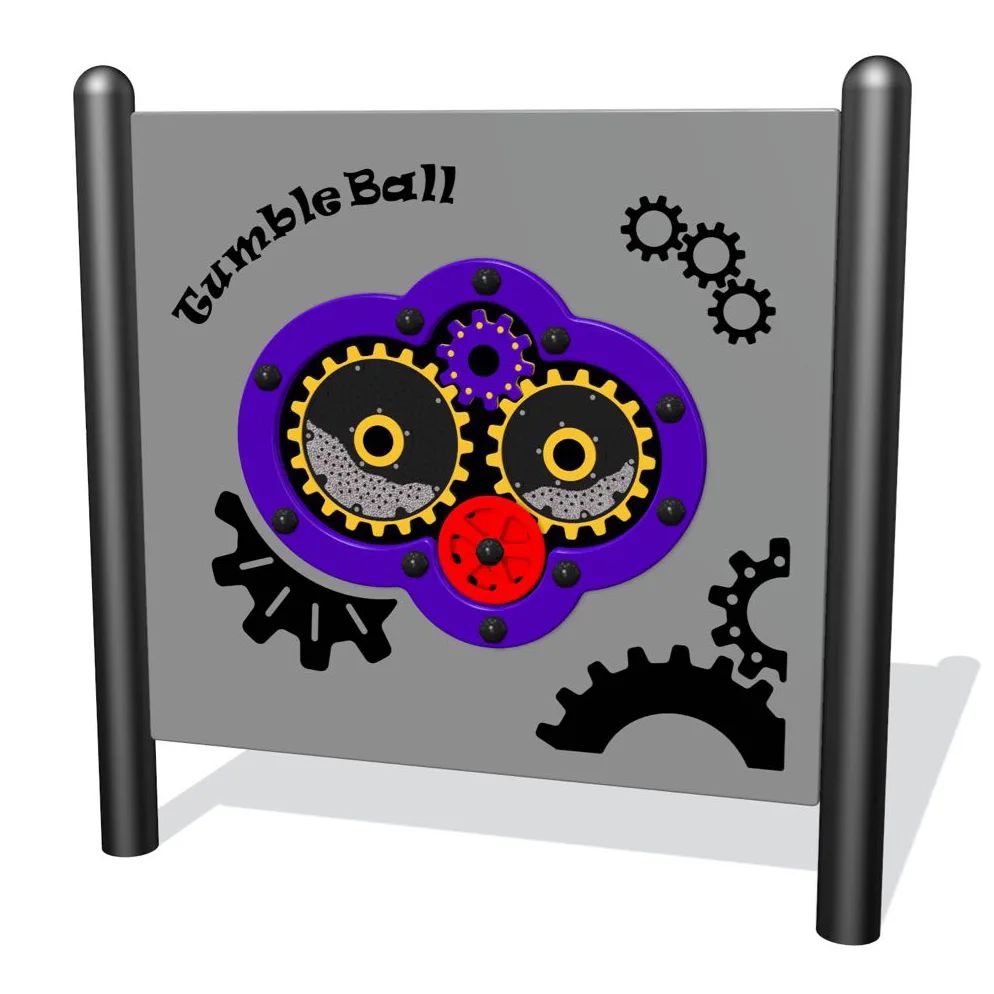
A sensory panel: gears and a tumbling ball a kid works with their hands, all at ground level. View it →
Are sensory play panels inclusive and wheelchair accessible?
The federal accessibility standards for play areas require a playground’s ground-level play components to sit on an accessible route, and they require at least one of each type of ground-level component you have to be reachable that way. As you add elevated equipment like climbers and decks, the rule asks you to make more of your ground-level components accessible too. Panels are ground-level by definition, so they’re exactly the kind of piece that helps a site meet both the count and the variety the rule is looking for.
A panel by itself isn’t “ADA compliant.” Whether a wheelchair user can actually reach and use one comes down to the route to it and the surface under it, and that’s a site decision, not something printed on the box. Get the path and the surfacing right and a ground-level panel becomes one of the easiest ways to make sure every kid on that playground has something to do. If you already carry inclusive pieces like our adaptive swing or a wheelchair-accessible merry-go-round, panels round out the ground-level side of the same idea.
Sensory and musical play panels for children with autism and sensory needs
A 2021 review of inclusive-playground research, published in Frontiers in Rehabilitation Sciences, found that a lot of playgrounds skip the sensory-based pieces altogether, the tactile panels that give kids different textures to touch and manipulate and the musical panels that make a range of sounds and vibrations. Those are the components that engage kids with sensory processing differences and visual impairments, and they’re the ones most often missing.
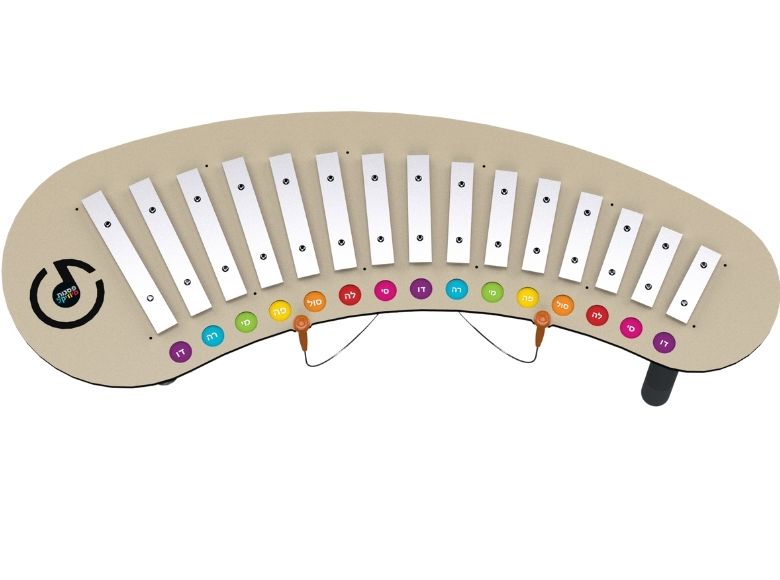
A ground-level outdoor marimba. Instruments like this are reachable without climbing. View it →
More is not automatically better, though. Too much sensory input crowded into one corner can overwhelm a kid who’s sensitive to it, and that same review recommends spreading sensory pieces around a playground rather than bunching them up. Freestanding panels make that simple, since you set each one where it helps instead of stacking them together.
As the National Center on Health, Physical Activity and Disability puts it, kids of all abilities benefit from being able to play and interact together. The win is a child with a disability playing right alongside everybody else, not parked off to the side.
Types of activity panels: sensory, musical, and imaginative
We carry three kinds, and each one counts as a different type of play, which is exactly the variety that accessibility rule is after.
Sensory and tactile. These are the hands-on ones. The Tumble Ball and the Twist panel give kids parts to turn and roll, and the Ball Maze is a trace-it-with-your-hands puzzle. A few of our older free-standing panels fit right in here too, like the Tic-Tac-Toe and Plinko panels.
Musical. Outdoor instruments a kid can make real sound with. We carry Bells, a Tongue Drum, a Piano, Drums, and Chimes. Sound and vibration are their own kind of sensory play, and they pull in kids who’d rather make music than climb.
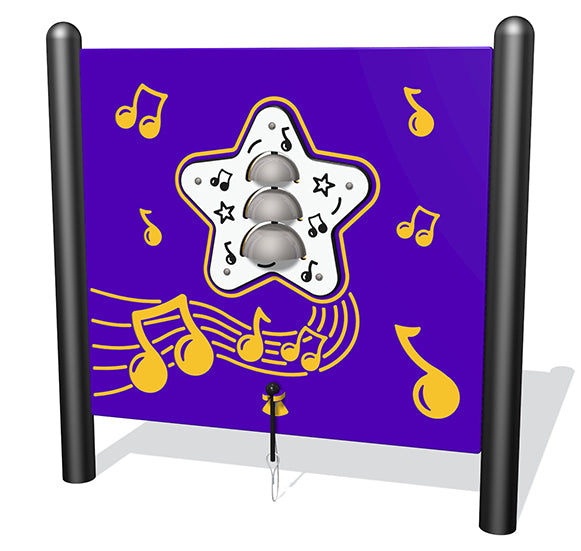
A musical panel: bells a kid plays standing or seated right at the panel. View it →
Imaginative. Panels built for pretend. The Sunnyside Farm and Driving panels turn a corner of a playground into a farm or a road, which is where a lot of younger kiddos do their best playing.
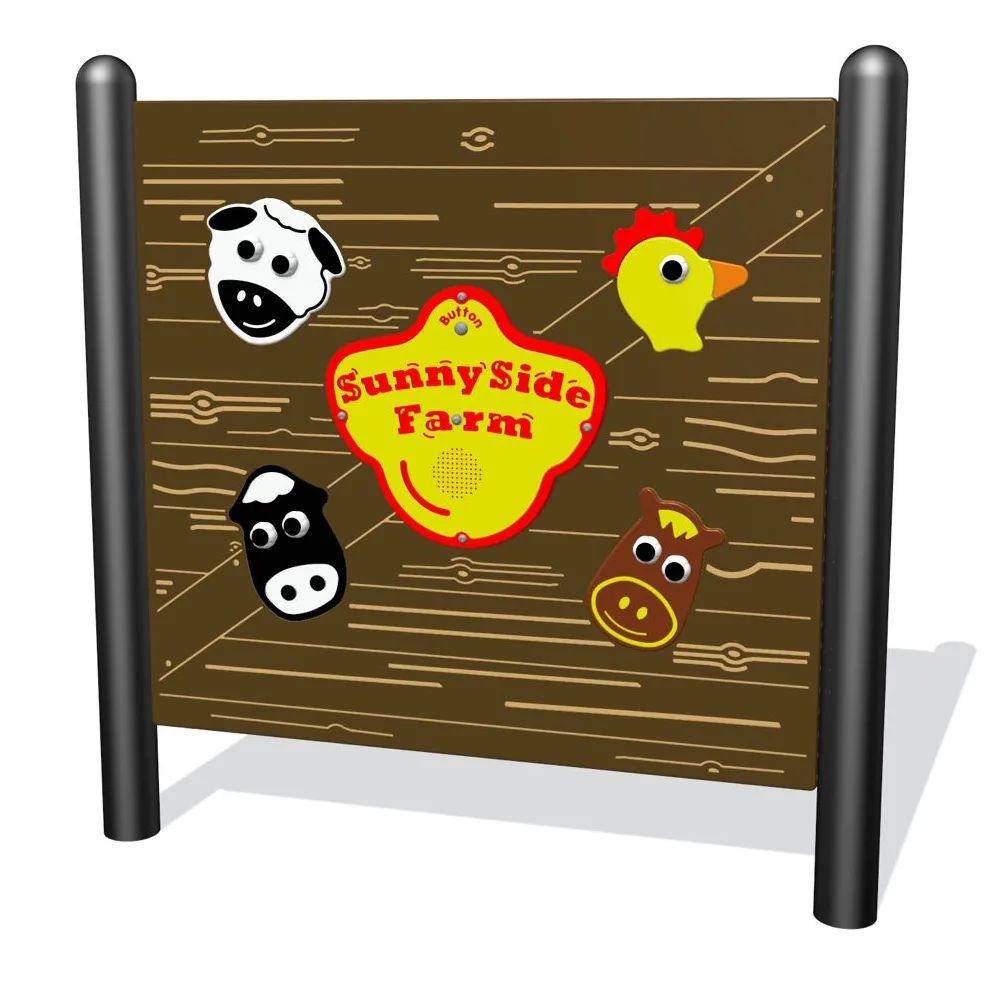
An imaginative panel that turns a corner of a playground into a farm. View it →
Where do sensory play panels go?
Just about anywhere, and that’s the practical appeal. Freestanding means there’s no big structure required. You anchor a panel to a pad and it stands on its own, so it can join an existing playground, line a courtyard, sit in a sensory garden, or a couple can make a small play spot by themselves. The musical and tactile ones work indoors too, in a sensory room or a therapy space, if outside isn’t where you need them.
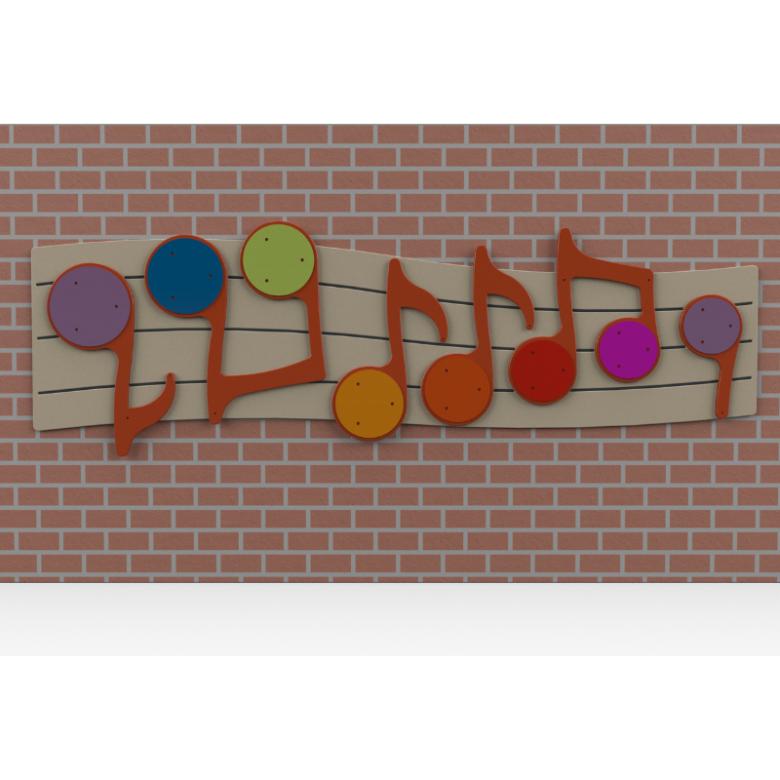
A wall-mounted music piece. Panels and walls fit where a full climbing structure won’t. View it →
A freestanding panel also makes an easy retrofit. If a playground is all climbers and slides, a panel is usually the simplest way to add a kind of play that’s missing, and more often than not that missing kind is the same ground-level, reachable play the accessibility rule is asking you to add. So one panel can do real good for kids and help you meet the rule at the same time.
If you’re planning a school, park, or daycare playground and want to talk through where panels fit, that lives alongside the rest of our commercial playground equipment in New Jersey.
Picking panels for your playground
Call me at 201-670-4000 or send over your site and who’s going to use it, and I’ll point you to the panels that fit. Browse the Activity Panels collection anytime to see them all. No pressure either way.
Frequently asked questions
What is a sensory play panel?
It’s a ground-level play surface kids touch, turn, spin, or play sounds on, with no climbing to reach it. Some are tactile, some are musical, and some are built for pretend play.
Are activity panels ADA accessible?
They’re ground-level play components, which is the category the accessibility standards want on an accessible route. A panel on its own isn’t certified accessible, though. Whether a wheelchair user can reach and use it depends on the route to it and the surfacing around it, which is part of your site design.
Are these good for kids with autism or sensory processing needs?
Yes, and they’re often the pieces a playground is missing. Inclusive-playground research points to tactile and musical panels for engaging kids with sensory processing differences. One caveat worth knowing: it helps to spread sensory pieces around rather than cluster them, so a kid who’s sensitive to input doesn’t get overwhelmed in one spot.
Can sensory panels go indoors?
The musical and tactile ones can. They work in a sensory room or a therapy space, not just on an outdoor playground.
Do I need a full playground structure to add one?
No. Panels are freestanding, so you anchor them to a pad and they stand on their own. You can add one to an existing playground or start a small play area with just a couple.
How do I get one?
Call me at 201-670-4000 or reach out through the site with your location and what you’re planning, and I’ll help you pick the right ones and put a quote together. You can browse them all on the Activity Panels collection.
Do you serve my part of New Jersey?
Yes. We’re a family-owned business in Midland Park and we install commercial playground equipment across New Jersey.