
Sports Court Construction in NJ: Pickleball, Basketball and Tennis Courts
- How Much Does It Cost to Build a Pickleball, Basketball or Tennis Court?
- How Much Does It Cost to Resurface a Tennis Court?
- How Long Does It Take to Build a Court?
- When Is the Best Time to Build or Resurface a Court in NJ?
- Resurface or Rebuild a Tennis Court: How Do You Know Which One It Needs?
- Asphalt or Concrete for a Court?
- Acrylic Court Surface or Sports Court Tiles: Which Is Better?
- How Much Space Do Pickleball, Basketball and Tennis Courts Need?
- Backyard Basketball and Pickleball Courts
- Fencing, Lighting and Court Equipment
- How NJ Schools and Towns Buy a Court
- Frequently Asked Questions About Sports Court Construction in NJ
- Where We Build Courts, and How to Get a Quote

How Much Does It Cost to Build a Pickleball, Basketball or Tennis Court?
Those are ballparks. The biggest swings in price come from the site itself: what shape the base is in, whether we resurface or rebuild, and how much fencing, lighting and drainage the job needs. Drainage alone, when a court needs it, runs about $260 to $325 per linear foot.
The colored surface you play on is a small share of a new or rebuilt court’s total, roughly 3% to 16%.
How Much Does It Cost to Resurface a Tennis Court?
By area, acrylic color and lines run about $2.50 to $5.00 per square foot, plus crack repair, which varies with the court’s condition.
A resurface starts with a pressure wash. Cracks get filled by width, a fine acrylic filler for hairline cracks and a heavier patch mix for wider ones, leveled flush. Then the court gets flooded, and anywhere water still covers a nickel after it drains gets patched. Last come a filler coat, at least two color coats and new lines, with each coat drying before the next one goes on. After the lines go down, play waits a day or two.
How Long Does It Take to Build a Court?
From digging to playing, a new court takes us about 6 to 7 weeks, weather allowing. Most of that time is waiting for the new asphalt to cure before any color goes on.
| Stage | Time |
|---|---|
| Excavation, stone and compacting | About a week |
| Paving | 1 to 2 days |
| Cure before color | We give new asphalt 30 days in 50°F-plus weather |
| Color coats and lines, one or two courts | About a week, done and dry |
| Nets, plus a backboard and rim mounted after the color | About a day |
Fencing and lighting add time on top of the schedule above, and how much depends on the job. Fence posts and hoop footings always go in before the color coats, and usually before paving too, depending on the type of hoop. A resurface is far shorter: for one or two courts, crack repair, color and lines take us about one to two weeks.
When Is the Best Time to Build or Resurface a Court in NJ?
The best time to call me is winter, so your court gets a spot on the spring schedule. Spring calls often end up waiting until summer or fall.
Each color coat needs the surface and the air at 50°F or warmer and rising, and that has to hold for a day after the coat goes down. In New Jersey that puts color work in the warmer months, and spring and fall jobs wait for the right days. A lot of people prefer to pave in winter and then do the color coating first thing in spring when the weather clears. This also works well!
Resurface or Rebuild a Tennis Court: How Do You Know Which One It Needs?
The most common mistake I see is an owner paying to resurface a court whose base has already failed. The cracks come right back.
These are the signs that a court’s base has failed:
- Cracks that join up into small pieces, like an alligator’s back
- Cracks wider than about half an inch, more than court crack fillers are made for
- Cracks you filled that opened back up within a year or two
- Low spots, or areas that have sunk
- Bumps and heaves, often from frost
- Edges breaking up and crumbling
If you see these, I’d plan on a rebuild, not a resurface.
Crack fills buy time, but the coating makers’ own data sheets say their products won’t stop cracks from coming back. Coating warranties cover the coating, not the base, so cracks and heaves that start underneath aren’t covered.
| What the old court shows | What it takes |
|---|---|
| Shallow low spots | A patch fills them |
| Water drains the wrong way | New pavement, since a patch can’t re-grade it |
| Sealed like a driveway, with coal-tar or asphalt sealer | Acrylic won’t hold on it (this one matters on backyard courts) |
| Structural cracks that keep spreading | The court is near the end of its life. An asphalt overlay can work over minor faults but may not stop major cracks from coming back through it. |
How Often Should a Tennis Court Be Resurfaced?
Acrylic courts usually go 4 to 8 years between recoats, depending on climate. Worn texture is one sign it’s time: a new court plays slower and speeds up as the texture wears. Each spring, walk the court and look for cracks and puddles.
How Long Does a Tennis Court Last?
An asphalt court lasts about 15 years, according to the USTA Middle States section, which adds that crack repair can help it last longer. That matches what I see on the job.
The best thing an owner can do to make a court last is keep it clean. Sweep with a soft broom or a blower, and hose it off at normal pressure, with a pressure washer only on a low setting. Check posts and hardware each season, and slack the nets or take them down for winter. For snow, use a plastic shovel, skip the salt and don’t chip at ice.
Dirt and leaves left sitting in standing water wear the surface like sandpaper. And standing water on a court, or water trapped beneath it, is the biggest single cause of court failure.
Asphalt or Concrete for a Court?
The usual way to build a concrete court without joints is post-tensioning, with steel cables tightened through the slab, and that’s specialist, engineered work. Our new courts go on asphalt, and we don’t build post-tensioned ones.
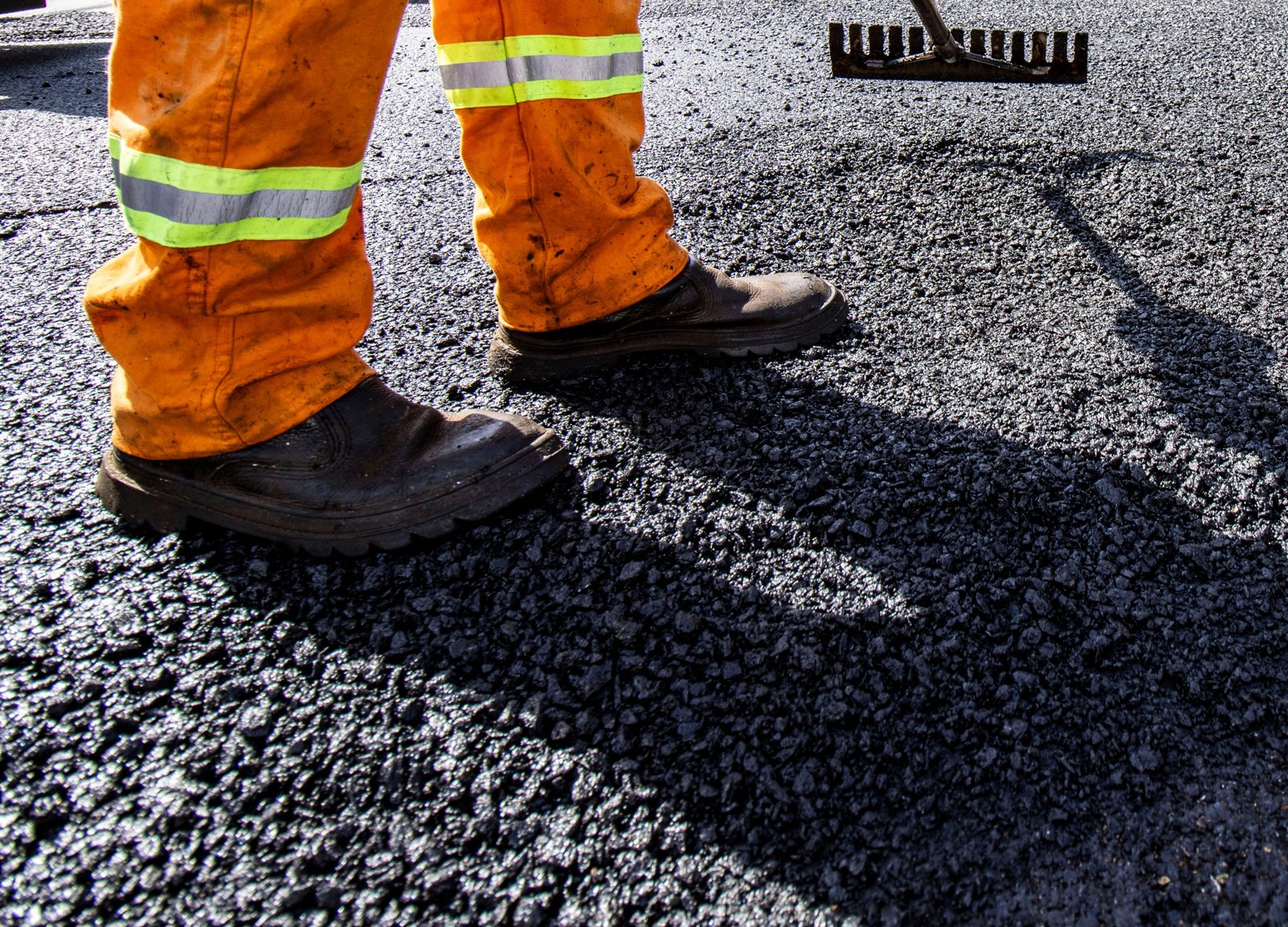
Under the color, a typical asphalt court is 4 to 6 inches of stone and two layers of asphalt: a 3-inch base course and a 1.5 to 2 inch surface course. Asphalt or concrete, the base has to drain, at about 1 inch of fall per 10 feet on one flat plane.
When an asphalt court wears out, it can be overlaid, or milled and repaved in place. We resurface existing concrete courts as well as asphalt ones.
Acrylic Court Surface or Sports Court Tiles: Which Is Better?
Most people who call us already know which one they want. For the ones on the fence, I look at four things: a logo, the price, the upkeep and the site itself.
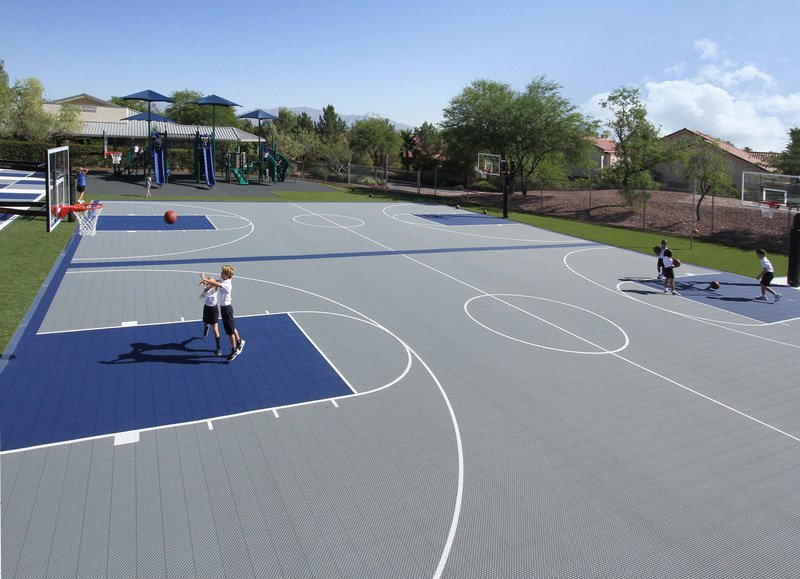
We build tile courts too, and they cost more up front than acrylic. A simple logo can be painted on acrylic, but for a more elaborate one, tiles are the way I’d do it.
In most cases they’re easier to keep up, since tile never gets recoated. Upkeep is mostly a leaf blower or a hose. Tiles do fade over time, and I’d recommend lifting a few now and then to sweep out what collects underneath. Plastic tile drains fast but can be slippery while it’s still damp.
Tiles can go straight over an old court that’s cracked but still sound, level and draining right, because they float over cracks a recoat can’t hide.
If the court sits somewhere extremely windy, or in a spot that floods, I’d go with acrylic. I’ve seen courts where the wind or floodwater picked the tiles up and broke them, and it ruined much of the surface. Some tile makers’ warranties don’t cover fire or wind damage, either.
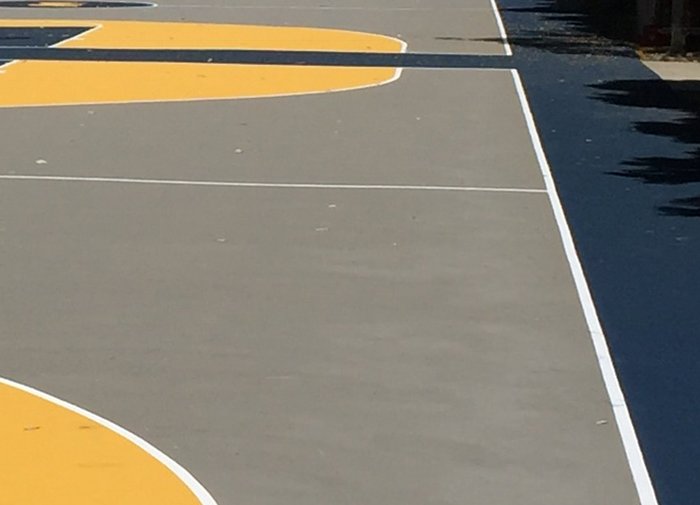
On acrylic, you pick the colors, and lighter ones reflect more sun and run cooler than dark ones.
We also offer cushioned acrylic courts, with several rubber-filled layers under the color coats, which feel softer underfoot and play a little slower.
On a budget job, mostly smaller ones like churches and home courts, we can paint the lines straight onto cured asphalt and skip the color coat. You give up the even texture and the layer that protects the asphalt from sun and weather, but the court can still take a color coat later.
How Much Space Do Pickleball, Basketball and Tennis Courts Need?
Pickleball needs at least 30 × 60 ft of paving, and a tennis court about 56 × 114 ft at club level. A high school basketball court is 84 × 50 ft, the optimum set by the National Federation of State High School Associations (NFHS), with at least 3 ft clear outside the lines.
| Sport | Court lines | Larger rulebook size |
|---|---|---|
| Pickleball | 20 × 44 ft | 34 × 64 ft, recommended for new courts (USA Pickleball) |
| Tennis (doubles) | 36 × 78 ft | 60 × 120 ft for international play (International Tennis Federation) |
| Basketball (high school) | The lines are the court size above | 10 ft clear preferred (NFHS) |
A basketball half court is 42 × 50 feet inside the lines, half of that NFHS court.
Can You Convert a Tennis Court to Pickleball?
Yes. The USTA’s 2023 guidance allows up to two blended pickleball courts on a 78-foot tennis court, one on each side of the net. It calls that advisable at sites with two or fewer tennis courts. At three or more, its guidance prefers courts built just for pickleball.
NJ towns often add pickleball lines during a resurfacing. Striping alone runs about $1,500 to $7,500 per court, depending on the sport and how many line sets go down.
Four dedicated pickleball courts on a tennis footprint is a construction job, not a repaint, with new net posts and often new fencing or dividers between courts. Whether four fit depends on the playing area. At the 30 × 60 minimum, four courts fill exactly 60 × 120 ft, the full international tennis footprint. At the recommended 34 × 64, they need 68 × 128. A tennis court paved only to club run-off, about 56 × 114, can’t hold four at either size.
Backyard Basketball and Pickleball Courts
We build backyard courts too, and the most common one is a basketball half court or smaller. On most backyard jobs, we handle the grading and drainage and give you a drawing of the court. A property survey or an engineer’s plan comes in only when your town or your lot calls for one. Some NJ towns do require an engineer’s grading plan once new paving passes a few hundred square feet.
Hoops for a home court are in our basketball hoops category.
Fencing, Lighting and Court Equipment
We supply and install the fencing as part of the court job, and the lights come in through a lighting company, also as part of the job. On our jobs, tennis and basketball courts get 10-foot fencing, and so does pickleball, which usually shares a tennis or basketball court. A pickleball court on its own can have a lower fence. The court-building guidelines from the American Sports Builders Association and USA Pickleball call for 7 to 8 feet, with 42-inch fencing between courts that sit side by side.
Windscreens and sound panels add wind load, so a fence that will carry them has to be built for it. On the lighting side, shielded fixtures with no uplight, aimed down at the court, cut glare and spill toward the neighbors, and controls can shut the lights off automatically after the courts close.
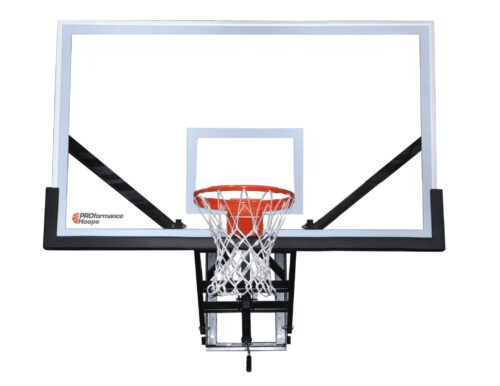
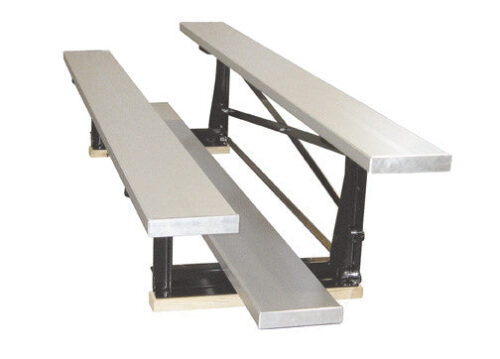
We also supply and install commercial basketball hoops and the net and post sets for tennis and pickleball.


How NJ Schools and Towns Buy a Court
Asphalt court construction is on our contract with the Bergen County Cooperative Pricing System (system #CK04, contract #BC-BID-24-35). It covers excavation, asphalt paving, the acrylic surface or tile, and installation. A member issues a PO against it with no separate RFP, and joining is free for NJ public entities with a resolution.
A court built or resurfaced for a town, county or school board is public work, so the crew is paid NJDOL’s prevailing wage, and buying through a co-op doesn’t change that. Some of our court customers have paid with grant funding, and the program rules and deadlines are on our NJ grants and funding page.
Frequently Asked Questions About Sports Court Construction in NJ
How much does it cost to rebuild a tennis court?
With new lights and fencing, a tennis court can run up to about $170,000. On an existing court, milling off the old surface, repaving and recoloring runs about $10 to $15 per square foot of court.
Do I need a permit to build a court in NJ?
Usually, yes. In New Jersey a fence over 6 feet tall needs a construction permit, and most court fences are taller than that. New court lighting needs an electrical permit and a licensed electrical contractor. Either the owner or the contractor can apply, and the permit belongs to the owner either way.
Can one court have lines for basketball and tennis?
Yes. Which sports get lines, and in which colors, is your call, and we don’t set a limit. Many multi-sport sites put separate courts side by side on one paved area instead. When pickleball lines go on a tennis court, they go in a different shade from the tennis lines.
Are sports court tiles good for pickleball?
Yes, many players like them, but the ball bounces a bit differently than on acrylic, so play a sample first.
Where We Build Courts, and How to Get a Quote
Getting a quote
Co-op member or not, send me the sport, where the court’s going, and whether it’s a new build or an old court that needs work.
Or send the details here