
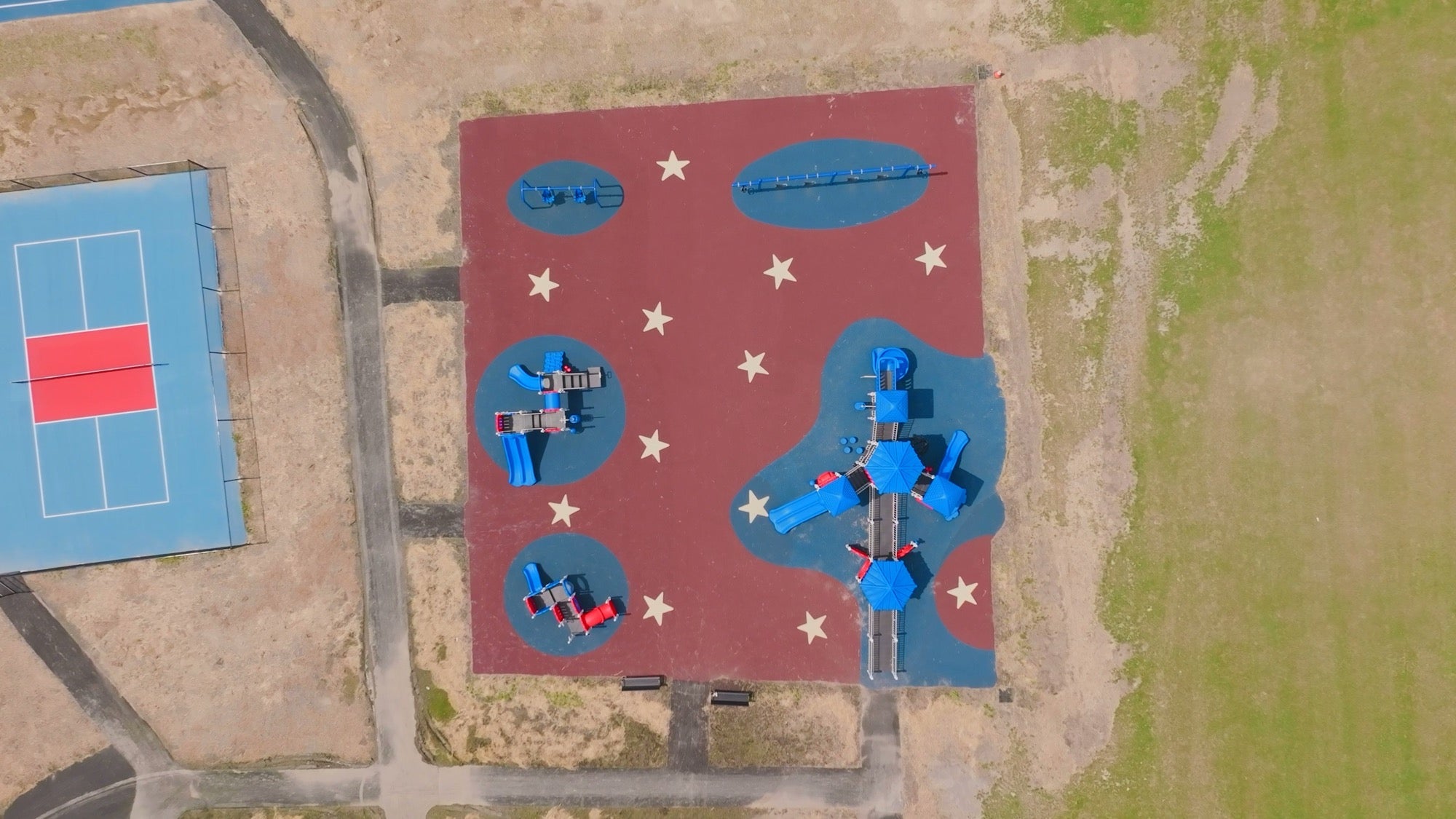
Commercial Playground Equipment for New Jersey Parks, Schools, Churches & Daycares
- What Is Commercial Playground Equipment?
- Who Does NJ Swingsets & Playgrounds Serve?
- How Do I Buy Commercial Playground Equipment in New Jersey?
- Can NJ Organizations Use Cooperative Purchasing for Playgrounds?
- How Much Does Commercial Playground Equipment Cost in New Jersey?
- How Does Installation Actually Work?
- What Can Go Wrong With the DIY Playground Approach?
- What Grants Are Available for New Jersey Playground Projects?
- What Modern, Inclusive, and Natural Playground Options Are Available?
- What are Some Projects We’ve Completed Across New Jersey and Nearby?
- Do We Serve All 21 New Jersey Counties?
- Frequently Asked Questions About Commercial Playground Equipment in New Jersey
- Ready to Discuss Your Playground Project?
What Is Commercial Playground Equipment?
The equipment itself is built to ASTM F1487, the standard for public playground equipment for kids ages 2 to 12. For age, the CPSC Handbook cuts public play finer, into three groups: toddlers 6 to 23 months, preschool 2 to 5 years and grade school 5 to 12 years.
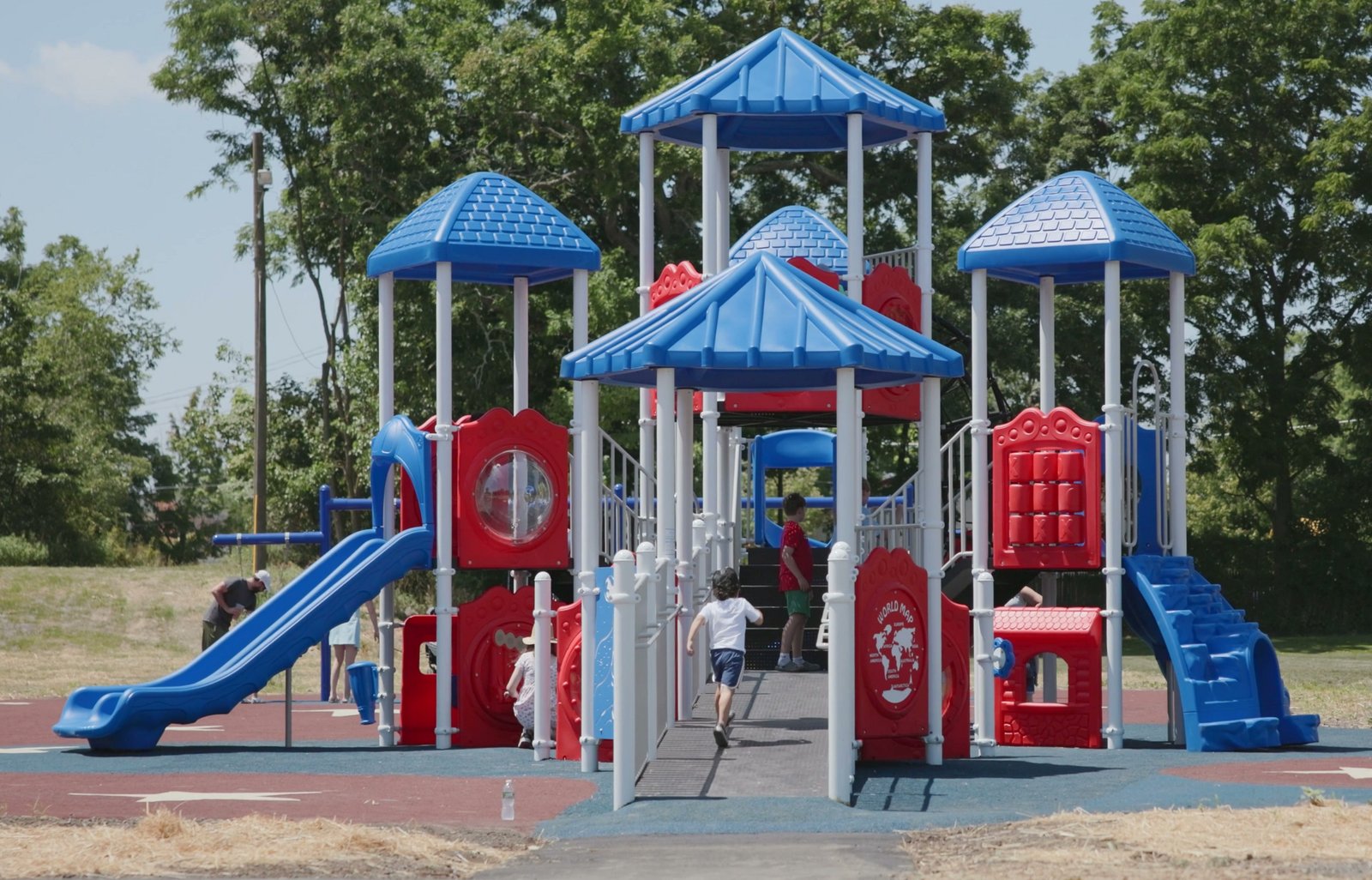
A few things sit outside F1487. Home playground equipment has its own standard, ASTM F1148, and public equipment for children 6 to 24 months falls under ASTM F2373. Toys, amusement rides, and sports and fitness gear for users over 12 aren’t covered either.
Who Does NJ Swingsets & Playgrounds Serve?
We work with municipalities, schools (public, private, charter and special needs), landscape architects, churches and religious organizations, daycares, HOAs, developers, property managers and community groups across New Jersey.
Each type of organization has its own quirks—different budgets, different procurement hoops, different timelines. That’s why I take time to actually understand your situation before throwing a quote at you.
Daycares and preschools plan for 2-to-5-year-olds, often with a separate infant and toddler area, schools for a whole recess at once, and parks for every age. A licensed child care center must comply with the Playground Safety Subcode, and before taking children to a community playground, it must make sure that playground’s surfacing and other elements comply.
I didn’t set out to be a commercial playground dealer. When I started NJ Swingsets in 2013, it was all residential – backyard swing sets, trampolines and hoops for families. But then a local church called asking if I could help them with a playground. Then a daycare. Then a school district reached out because they couldn’t find someone local who actually understood commercial playground requirements and would show up when they said they would.
So I got certified, built relationships with the right manufacturers, and figured the rest out along the way. Commercial playgrounds are now a major part of what we do—from Sussex County in the north to Cape May down below.
How Do I Buy Commercial Playground Equipment in New Jersey?
- Define your needs – What age groups will use it? How many kids at once? Any accessibility requirements? What’s your realistic budget range?
- Check your procurement options – A public entity can find out if the Bergen County co-op is an option, which would skip the RFP. A private organization works through its own internal approval process. Knowing this early prevents surprises.
- Get a site evaluation – I’ll come out and look at your space. We’ll discuss what it can accommodate, what site prep might be needed, and any potential issues. This isn’t mandatory but it is free with no obligation. Large projects may use a landscape architect here.
- Explore funding – Grants (Green Acres, with its premium for playgrounds that are completely inclusive), capital budgets, fundraising, PTO campaigns and financing. Let’s figure out how you’re paying for this before we get too far.
- Get quotes and compare – I’ll provide options at different price points. In the meantime, you can start browsing our commercial playgrounds here. Make sure you’re comparing apples to apples—different brands have different pricing and installation price points for varying reasons.
- Design and approve – Review the layouts and get sign-off from everyone who has to say yes.
- Install and inspect – Installation, a final safety inspection, then the ribbon-cutting. I’ll be there for the whole thing.
What Are New Jersey’s Public Bid and Quote Thresholds?
For a New Jersey town or school board with a Qualified Purchasing Agent, the rules run by dollar amount.
| Contract amount | What the law asks for |
|---|---|
| Under $7,950 | The unit can award without quotations |
| $7,950 to the bid threshold | At least two competitive quotations, if practicable |
| Over $53,000 (the bid threshold) | An advertised public bid, unless the unit buys through a state contract or a registered cooperative purchasing system |
The quotation threshold is 15% of the bid threshold, and the State Treasurer resets both every five years. Units without a Qualified Purchasing Agent have lower thresholds: school boards bid above $39,000 (quotes above $5,850), and towns and counties bid above $17,500 (quotes above $2,625). Any unit can also set its own lower thresholds.
Private schools, churches, private daycares and HOAs aren’t bound by the public bidding law. They follow their own approval process. Most school and park playground projects land above the bid threshold, so for a public buyer the real choice is a formal bid or a co-op.
Can NJ Organizations Use Cooperative Purchasing for Playgrounds?
If you work for a New Jersey municipality, school district, or any public entity you are most likely aware of purchasing co-ops and state contracts. You are at least somewhat familiar with the whole RFP process—writing the spec, advertising for bids, evaluating proposals, dealing with the purchasing department, waiting months while nothing happens. And you’d prefer not to have to deal with that.
The competitive bidding has already been done. The pricing is already negotiated. You just… buy through the existing contract. We’re an awarded vendor under Bergen County Cooperative Pricing System #CK04 (contract #BC-BID-24-35, Park & Playground Equipment). If your entity is a co-op member, your purchasing dept can issue a PO against that contract — no separate RFP. Not a member yet? Joining is free for NJ public entities and takes a resolution — I’ll walk your purchasing office through it. And it can cut months off your timeline.
What makes it work: the lead agency bids once for every member. Each member certifies its funds, then buys by its own contract at the master contract’s specs and prices. The state’s Division of Local Government Services registers and approves the co-op. Its members include towns and school boards across the state, not only in Bergen County, and the Bergen contract covers installation as well as equipment.
Only public “contracting units” can join. HOAs, churches, private daycares and private schools can’t, and don’t need to, since the public bidding law doesn’t bind them. If you are not sure if your organization qualifies, just shoot a call or email. I can usually tell you in about five minutes whether co-op purchasing will work for your situation.
How Much Does Commercial Playground Equipment Cost in New Jersey?
Here’s my best assessment of what projects actually cost, based on work we’ve done across the Northeast:
| Organization | Typical range | What it usually includes |
|---|---|---|
| Small Daycare | $30,000 – $75,000 | Age-appropriate structure, basic surfacing, professional installation |
| Large Daycare/Preschool | $75,000 – $200,000 | Multiple play areas, some inclusive elements, more premium surfacing |
| Private School | $50,000 – $150,000 | Full playground system(s), possible shade structures, quality surfacing |
| Public School | $75,000 – $200,000 | High capacity, built to handle hundreds of kids daily |
| Church/Religious | $30,000 – $120,000 | Varies a lot, depending on congregation size and whether you’re building for Sunday school or daily programming |
| Small Municipal Park | $75,000 – $200,000 | Community-sized equipment, safety surfacing, site amenities |
| Large Municipal Park | $250,000 – $750,000+ | Destination playground, inclusive design, multiple age groups, the works |
Why does commercial gear cost what it does? It’s built to strict standards and installed to them, too. That gear has to handle dozens of kids at once, survive years of institutional use, meet ASTM and CPSC requirements and last 15-20+ years.
What Does a Playground Equipment Quote Leave Out?
Beyond equipment and installation, here’s what catches organizations off guard. Please keep in mind these ranges are my best attempt at ranges for work in New Jersey. Rates elsewhere will definitely vary.
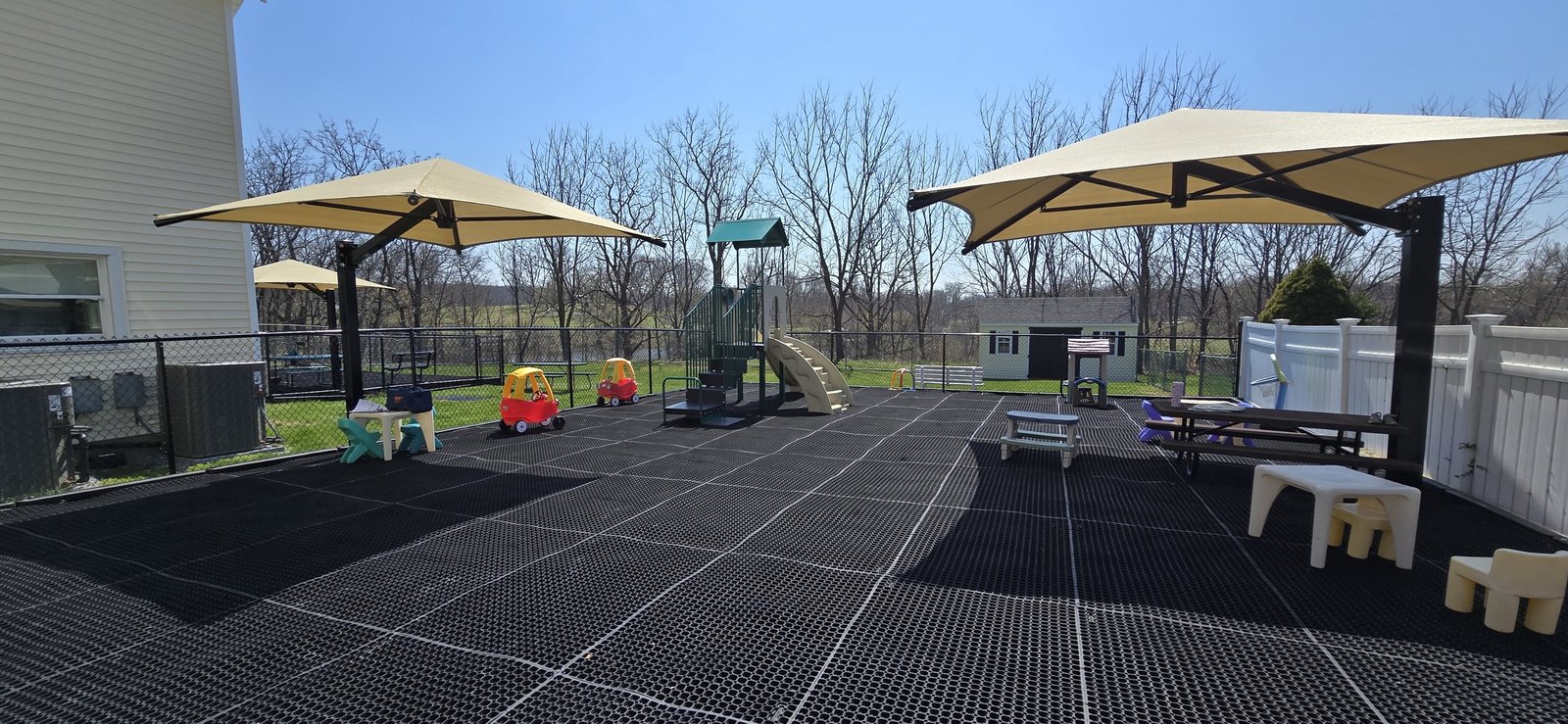
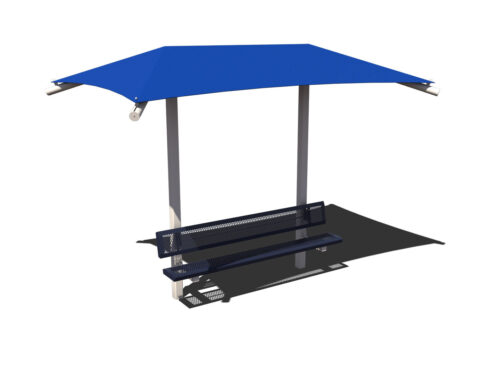
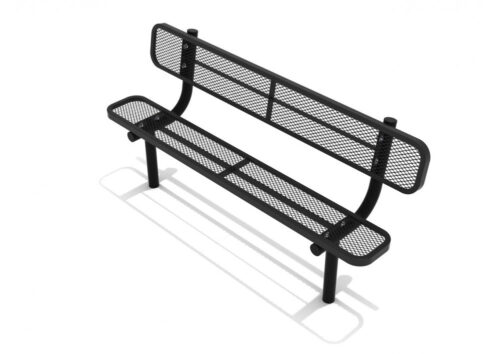
A lot of it comes down to one definition. ASTM F1487 says benches, tables, independent shade structures and borders that contain surfacing are site furnishings, not playground equipment. So an equipment quote, by definition, doesn’t include them.
- Site preparation. Excavation, grading and drainage are very hard to put a range on, because land varies so much. Some surfacing types need extensive site prep, too.
- Replacing an old playground? Tearing the old one out generally runs $3,000-$15,000, depending on size and disposal requirements.
- Two items are priced by the linear foot, installed. Fencing, which many daycares and some schools require, runs $25-$75. Borders of timber, concrete or rubber to contain surfacing come in at $15-$25.
- Shade structures get priced in two parts: $5,000-$150,000+ for the shade itself, plus 75-125% of that for installation. A $5,000 shade could be about $10,000 installed.
- If the playground is completely inclusive, shade and fencing aren’t optional extras. It must shade at least 20% of its unitary surface and equipment area, and it must be fenced.
- Then there’s upkeep. Budget 3-5% of the equipment cost each year for inspections, repairs and surfacing top-offs.
Putting numbers to your site
I’d rather have a conversation upfront about what things actually cost than watch you waste money on something that won’t work! Tell me about your space and your goals, and I’ll put real numbers to it as best I can.
How Does Installation Actually Work?
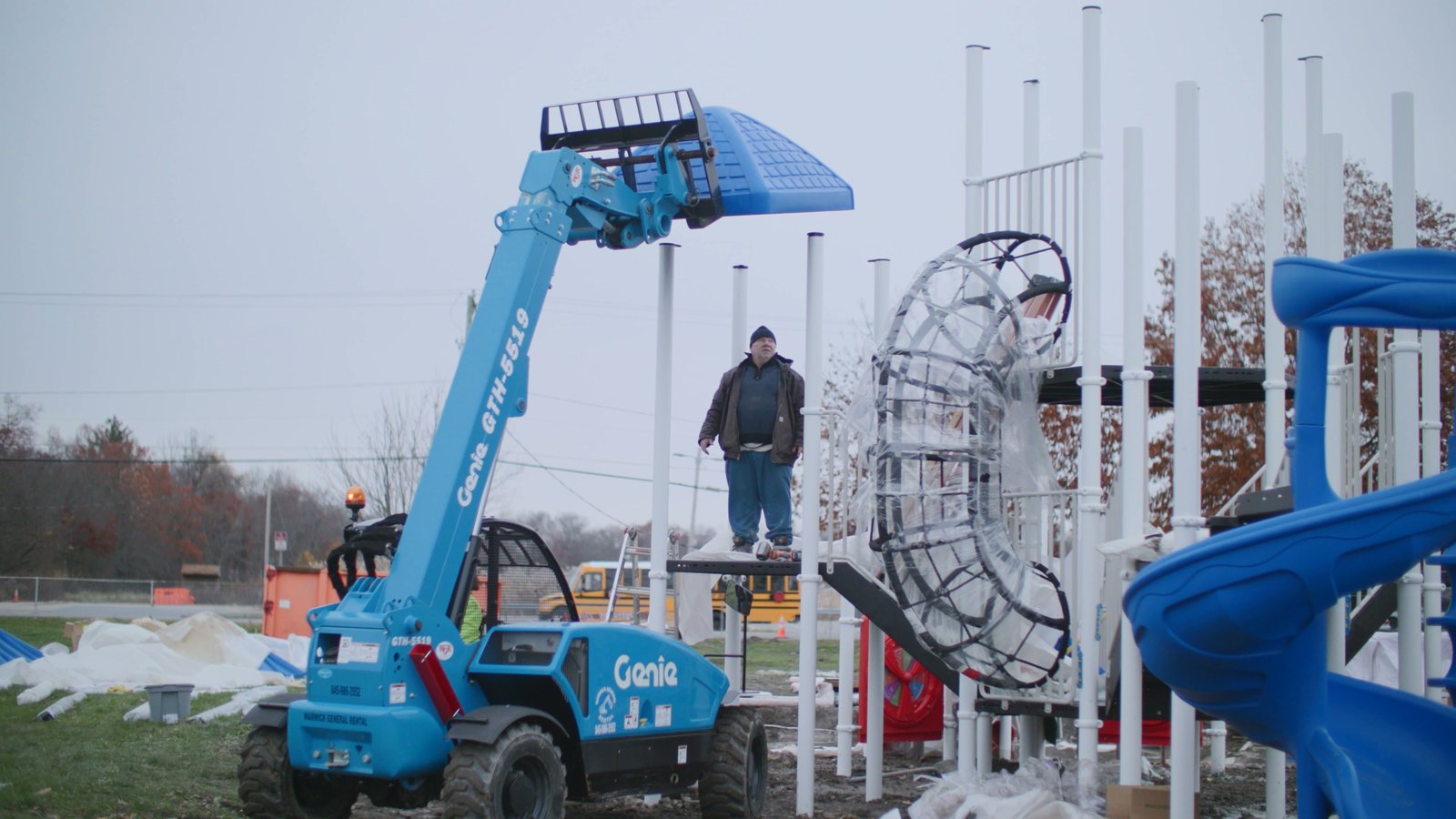
I suppose we could just drop off boxes and wish you luck but…
- Site evaluation – I come out personally to look at accessibility, existing conditions, and potential problems before they become expensive surprises
- Proper surfacing – There are pros and cons to all surfacing types – read our full surfacing guide, see our artificial turf installation page, or call me and we’ll go over everything.
- Final walkthrough – We don’t consider a project done until you’re happy and everything meets standards.
- Ongoing support – Questions six months from now? Call me.
Behind those bullets, I’m working against a few rules that decide what your playground can look like. Use zones decide how many pieces fit a site. Every piece of equipment needs one: at least 6 feet in all directions around stationary equipment. A to-fro swing needs twice its pivot height in front and behind, with no other use zone overlapping it.
Surfacing is often 15-50% of a commercial project’s total, so it’s worth knowing what drives it. Inside the use zone, it has to meet ASTM F1292, with its depth set by the surfacing product’s tested critical-height rating. The Handbook’s depth table only covers loose fill that hasn’t been tested. Our preference is to run one surface type across all the use zones, never a mix.
Accessibility shapes the layout too, and the 2010 ADA Standards handle it in two parts. One is how many play components must be accessible: at least one of each type of ground-level component on an accessible route, and at least 50% of elevated components (§240). The other is how kids get to them, through routes, ramps, transfer systems and surfaces (§1008). Once a structure has 20 or more elevated components, transfer systems can connect no more than 25% of them.
All installations follow CPSC playground safety guidelines and ASTM F1487. New Jersey makes the CPSC Handbook’s guidelines for installation and inspection mandatory. The Handbook says to follow the manufacturer’s installation instructions strictly. It calls for a thorough inspection by a person qualified to inspect playgrounds before first use, and for keeping the instructions and records in a permanent file.
That paperwork sits with you. Under the subcode, compliance is the owner’s and manager’s responsibility, and they must certify in writing that the work complies and keep that certification on file. We can provide the manufacturer’s instructions, the inspection and the surfacing documentation for your file.
Who Owns What When the Work Is Split?
Let me share what happens when responsibilities get split up. A municipality tried to save money by: developing designs in-house, selecting equipment themselves, hiring a general contractor for site work, and hiring us separately just for playground equipment purchase and installation. It was a $600,000 municipal project that included basketball and pickleball courts.
What went wrong: When we finally got on site for the installation, we realized the general contractor’s excavation was uneven—we couldn’t install equipment on an unlevel base. We had to re-grade with our own equipment. Then there was a communication breakdown about who was providing crushed stone for the base. The town thought the contractor would handle it. The contractor thought we would. Nobody ordered it. We discovered this the day before we needed the crushed stone delivered.
The project had a winter deadline and we barely made it—only because the Recreation Director stepped in and started lighting fires under everyone. The lesson: Split responsibilities create gaps. Gaps create delays. Delays cost money.
If the work is split, decide up front who owns each of these:
- Excavation and final grade
- Base stone
- Drainage
- Borders
- Surfacing
- Equipment
- Who orders each material
- Who signs off the grade before installation starts
Playground Maintenance and Inspections
Inspections don’t stop after install day. New Jersey makes the Handbook’s maintenance and inspection guidelines mandatory, the record-keeping included. Those guidelines point to the manufacturer’s maintenance and inspection schedule, ask for more frequent inspection of busy playgrounds, and call for signed and dated records of inspections, repairs and reported injuries. Neither the Handbook nor the subcode sets a retention period.
We offer CPSI-certified playground inspections for schools, municipalities, daycares, and any organization that needs their equipment evaluated. We check equipment condition, surfacing integrity, fall zones, hardware, and overall compliance.
What Can Go Wrong With the DIY Playground Approach?
Installing commercial equipment is its own trade. It runs on ASTM F1487, use-zone clearances and surfacing rated to fall height.
The DIY disaster I see way too often: An organization tries to save money by buying cheap equipment online and hiring a random contractor to install it. Six months later, they’re calling us because the playground failed inspection, or parts are breaking, or kids are getting hurt. Now they’re paying twice—once for the first try, and again to do it right.
What Grants Are Available for New Jersey Playground Projects?
If you’ve heard of Jake’s Law, that pilot has ended. On a Green Acres Park Development project, a completely inclusive playground now lifts a town’s 25% base share to 50%, and an Urban Aid municipality’s to 100% with no local match.
Bundling the inclusive playground into unrelated scope voids the premium, and a site funded in the last 20 years can be barred from re-funding. So read the rules that disqualify you before the ones that qualify you. The Green Acres guide lists them.
The Local Recreation Improvement Grant is open to New Jersey counties, municipalities and school districts, with a $75,000 recommended maximum award. No match is required, though a local match gets priority.
Grants add 6-12 months to your project. Every program, cap and deadline is in the playground grants and funding guide.
What Modern, Inclusive, and Natural Playground Options Are Available?
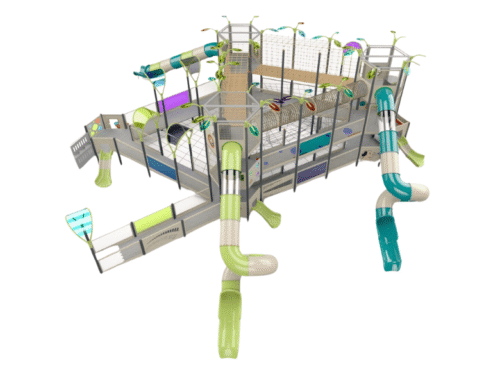
We carry modern, inclusive, and natural playground equipment — from LED-lit structures and fully accessible play systems to robinia wood designs that go beyond the standard metal-and-plastic setup.
LED-Lit Playgrounds
On LED-lit play equipment, the lighting can be built into the equipment itself, the panels and even the slides, instead of floodlights added afterward. That way a playground can stay usable after dark.
Robinia Wood Playgrounds
Robinia wood is naturally durable and holds up outdoors for decades. The structures built from it run to tall towers, enclosed slides, rope bridges, climbing nets and elevated paths.
Fully Accessible Playgrounds
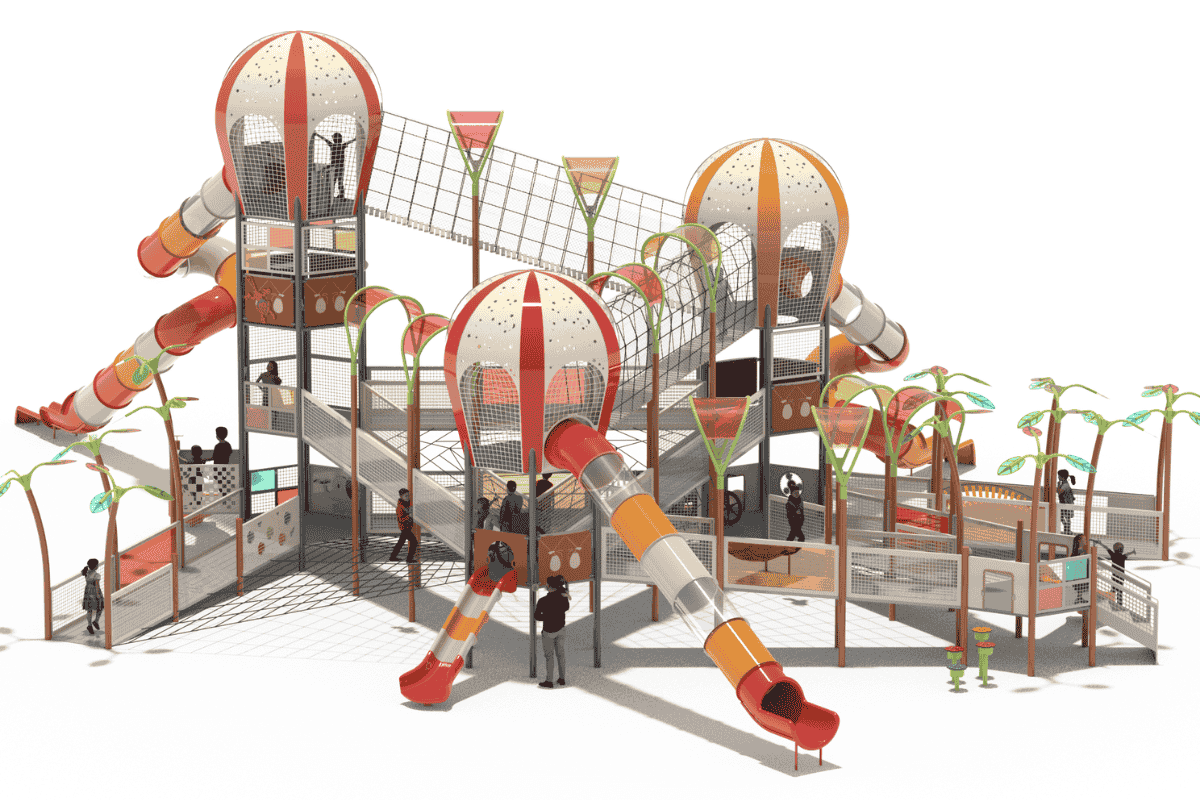
This is one of the reasons we chose Psagot Play as a manufacturer. Their “Balloons” play system won the GOOD DESIGN 2022 international design award — and it’s not hard to see why. The whole structure was designed from the ground up so that kids in wheelchairs can access the upper levels and actually play with their friends, not just watch from the ground. Wheelchair-accessible bridges connect to higher floors, and there are sensory panels, musical elements, rope nets, and slides for every age and ability. It’s fully inclusive without feeling like a medical device — it’s colorful, fun, and the kids don’t even realize it’s accessible. They’re just playing. That’s how it should be.
Those sensory and musical panels are worth a look on their own. On an inclusive playground, the ground-level pieces a kid plays with without climbing do a lot of the work, so I put together a rundown of the sensory, musical, and imaginative play panels we carry.
Brands We Carry
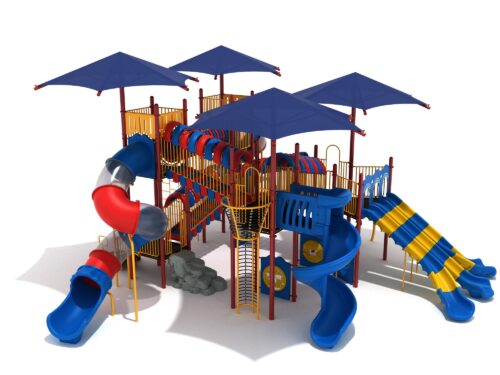
We carry five commercial playground brands: Playground Equipment, Psagot, Grounds For Play, Sports Play and Ultra Play, with over 1,800 commercial products in the catalog. Having several manufacturers gives us more to choose from, so we can find the best fit for your project.
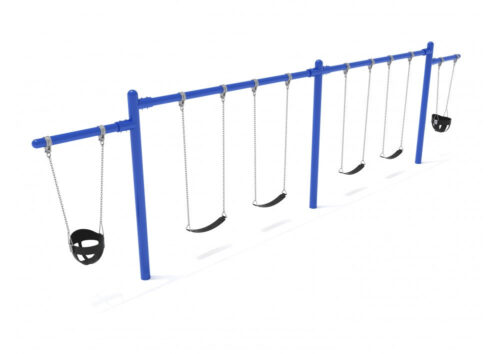
By type, that means playground structures, free-standing play, commercial swing sets, inclusive play, shade structures and park and site amenities, plus outdoor classroom equipment.

What are Some Projects We’ve Completed Across New Jersey and Nearby?
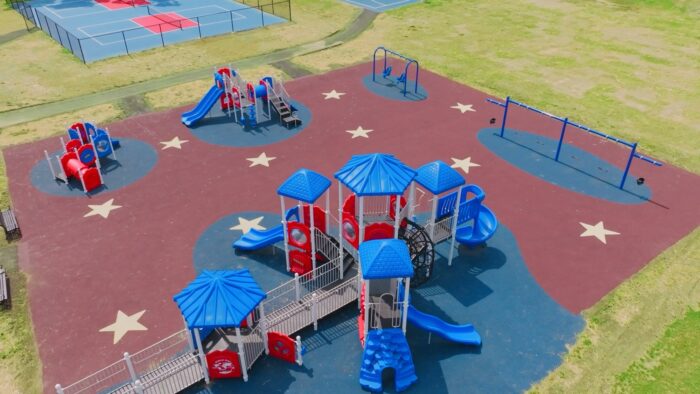
We’ve done commercial playground work for towns, counties, schools, churches, daycares and community organizations, from private schools like Saddle River Day School to daycares and preschools, and for the County of Bergen. Here are some examples of commercial work we’ve completed throughout New Jersey and nearby. I could talk about these all day—every project has its own story.
Parks and towns
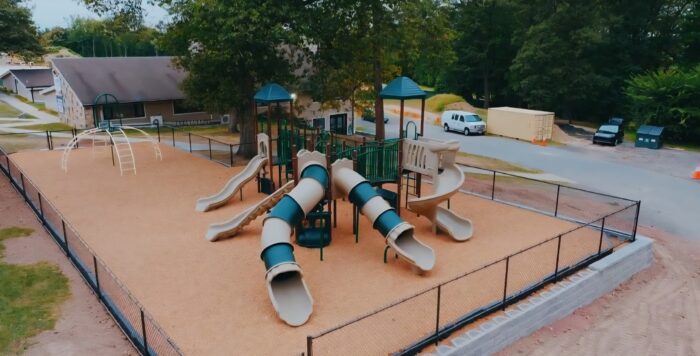
Erie Street Park
An accessible playground with poured-in-place surfacing, a public-works job.
Schools
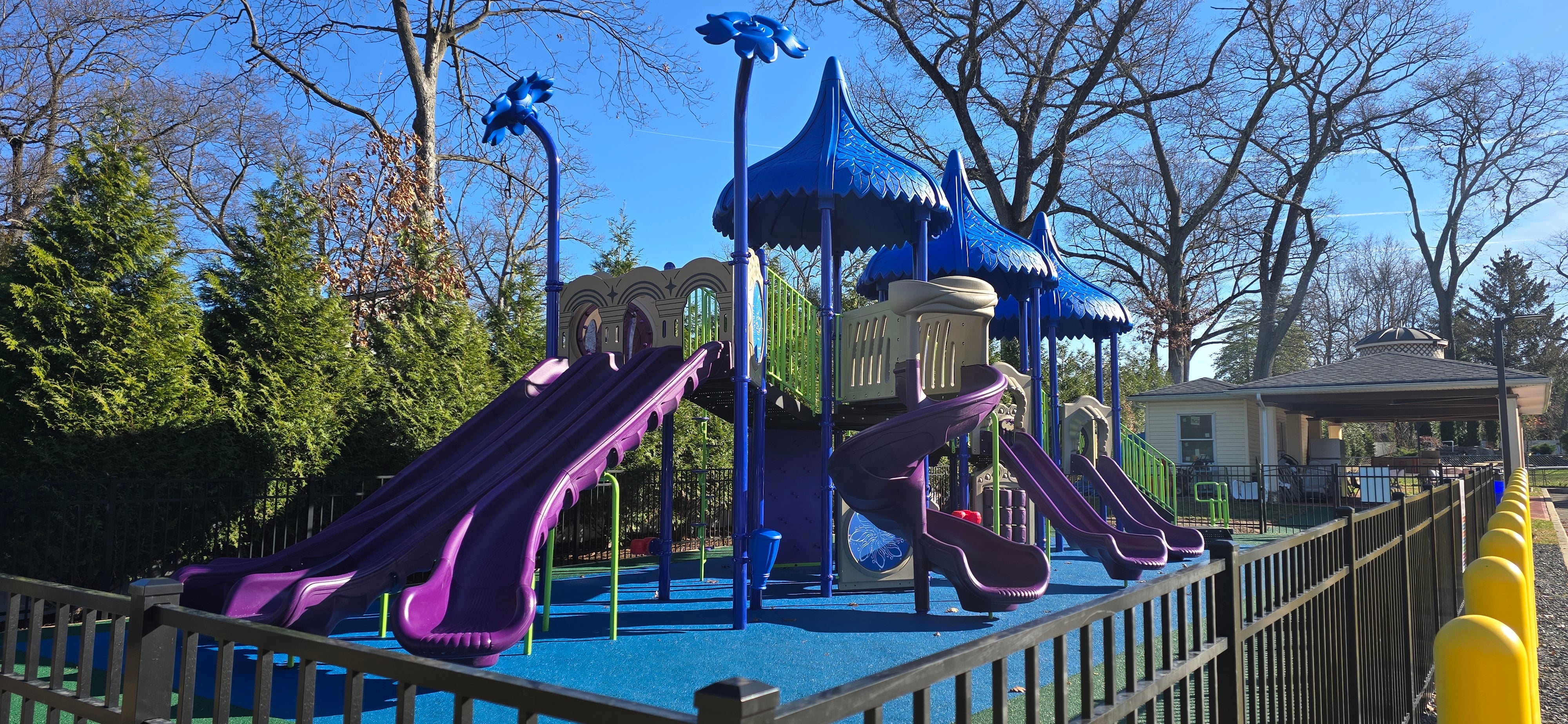
Saddle River Day School
Full playground design and installation.
Religious centers
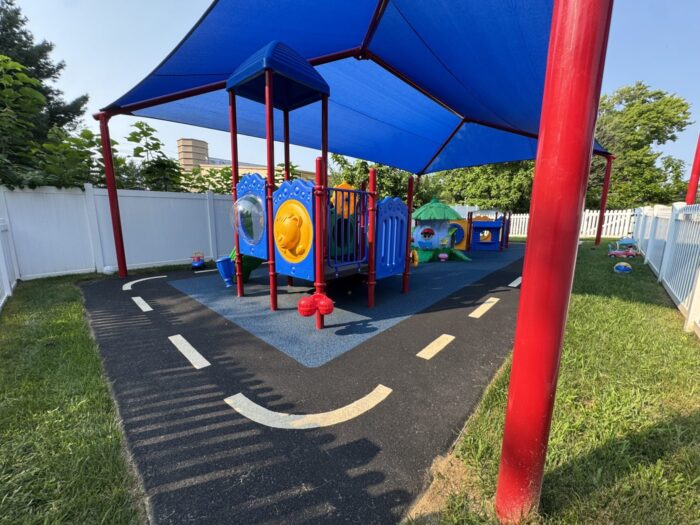
El Zahra
Daycares
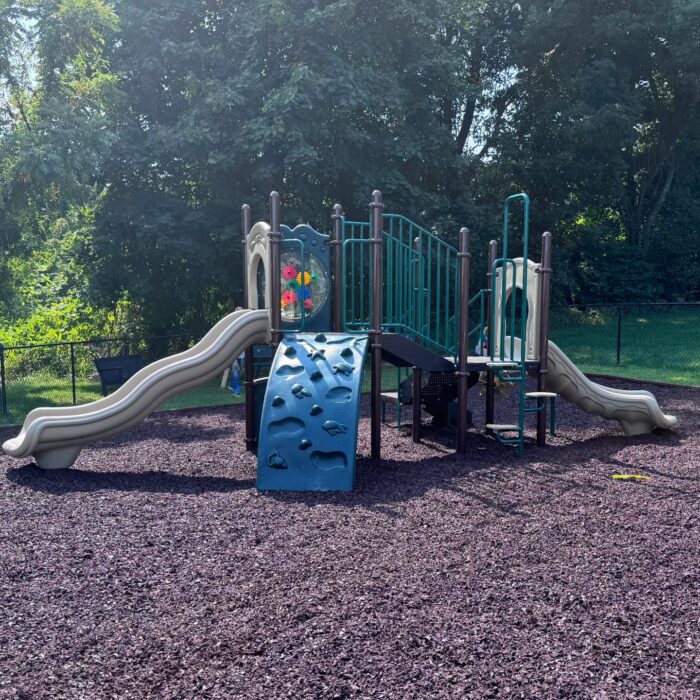
Creative Nursery
A complete playground and “tyke track” surfacing for a licensed childcare facility.
HOAs and apartments
Brentwood Gardens
A playground installed at an apartment complex.
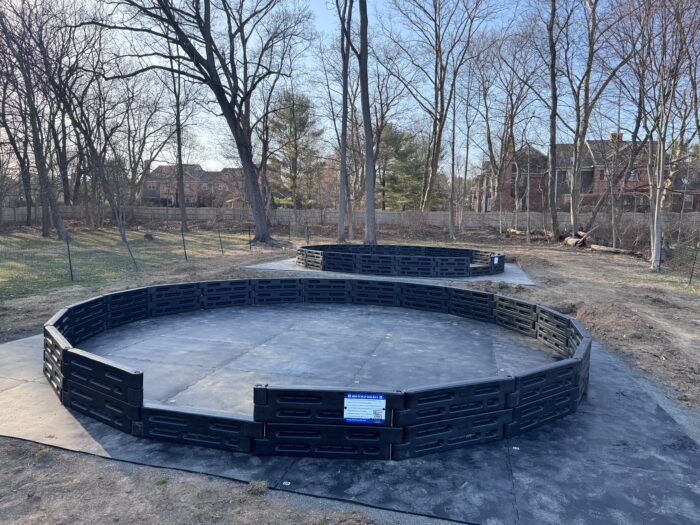
Community organizations
River Crossing YMCA
Two 26′ gaga ball pits with rubber matting.
Here’s the ribbon cutting at Erie Street Park in the Village of Goshen.
Do We Serve All 21 New Jersey Counties?
Our strongest presence is in Northern and Central New Jersey, but we work statewide. We also serve parts of New York, Connecticut, and Pennsylvania.
If you’re in or near Bergen County
I’m based in Bergen County. When you need a site visit, quote revision, or post-installation support, I’m already here. I was born and raised in Bergen County. My business is in Bergen County. My children go to school in Bergen County. Between my residential swing set business, my parties and play events, and the commercial work—I already know tons of people throughout this area!
- Local knowledge – I know the quirks of each town, and I’ve most likely brought my kids to a park in your town!
- Flexibility – Need to adjust the project mid-stream? Let’s grab coffee and figure it out. I’m 20 minutes away.
I cannot mess things up. If I screw up on a job, everyone’s going to know about it. There’s a real chance that whoever ends up playing on your playground knows my family. You know where to find me. You know I’m going to do the job right because my reputation isn’t some abstract thing. It’s my kids’ school, my neighbors, my community.
Frequently Asked Questions About Commercial Playground Equipment in New Jersey
What does a commercial playground cost in NJ?
Projects run from $30,000 at a small site to $750,000+ for a large municipal park. Most schools and mid-size parks spend $50,000-$200,000, installed. Installation is typically 35-50% of what the equipment costs.
Are you approved for New Jersey cooperative purchasing?
Yes, an awarded Bergen County co-op contract, open to public bodies anywhere in NJ. Members buy on a purchase order instead of a 3-6 month bid. Non-members join first by resolution, free to any NJ public body.
What playground equipment brands do you carry?
Five commercial lines: Psagot, Ultra Play, Playground Equipment, Sports Play and Grounds For Play, over 1,800 items in all.
Do you help with grant applications?
Yes, at no charge. Green Acres adds a 25-point premium to a town’s Park Development share when its playground is completely inclusive, bringing an Urban Aid municipality to full funding. LRIG, limited to school districts, municipalities and counties, recommends a $75,000 maximum award. A match isn’t required, but one earns priority. Grant funding adds 6-12 months.
What are the hidden costs of a playground project?
My best New Jersey ranges, and they vary: site prep is very hard to give a range for, since land varies. Old-playground removal is generally $3,000-$15,000. Fencing is $25-$75 a linear foot installed, surfacing borders $15-$25 a foot. Shade is $5,000-$150,000+ before 75-125% for installation. Upkeep is 3-5% of equipment cost yearly.
What’s the process for buying a commercial playground in NJ?
Churches, HOAs, private schools and private daycares follow their own approvals, not public bidding law. A public school board or town with a QPA may award without quotations below the quote threshold. Up to the bid threshold, it needs two or more competitive quotes, if practicable. Over $53,000, it advertises a public bid unless it buys from a state contract or registered co-op.
What areas do you serve?
Every NJ county, from our Bergen County showroom. We install in NJ and nearby PA, NY and CT, and ship to all 50 states.
How long does a commercial playground project take?
Typically 2-4 months for a private daycare or church, 3-5 months for a public co-op purchase and 6-18 months with grant funding.
What safety rules does a commercial playground have to meet in New Jersey?
New Jersey’s Playground Safety Subcode adopts the 2010 CPSC Handbook. Every new playground must conform, as must new or replacement equipment from a government body, a nonprofit or a private for-profit owner. The Handbook’s installation and inspection guidelines are mandatory here, including a qualified person’s inspection before first use.
Ready to Discuss Your Playground Project?
Getting a quote
Tell me what you’re trying to build, roughly what you can spend, and when it needs to open. If a site visit makes sense, I come out. If something won’t work for your situation, I’ll say so early, while it’s still cheap to change course.
Or send the details here
Quick response – I don’t always pick up the phone but I always call back!
Showroom: 59 Greenwood Ave Unit 9, Midland Park, NJ 07432, Monday to Saturday, 10 AM to 5 PM.